
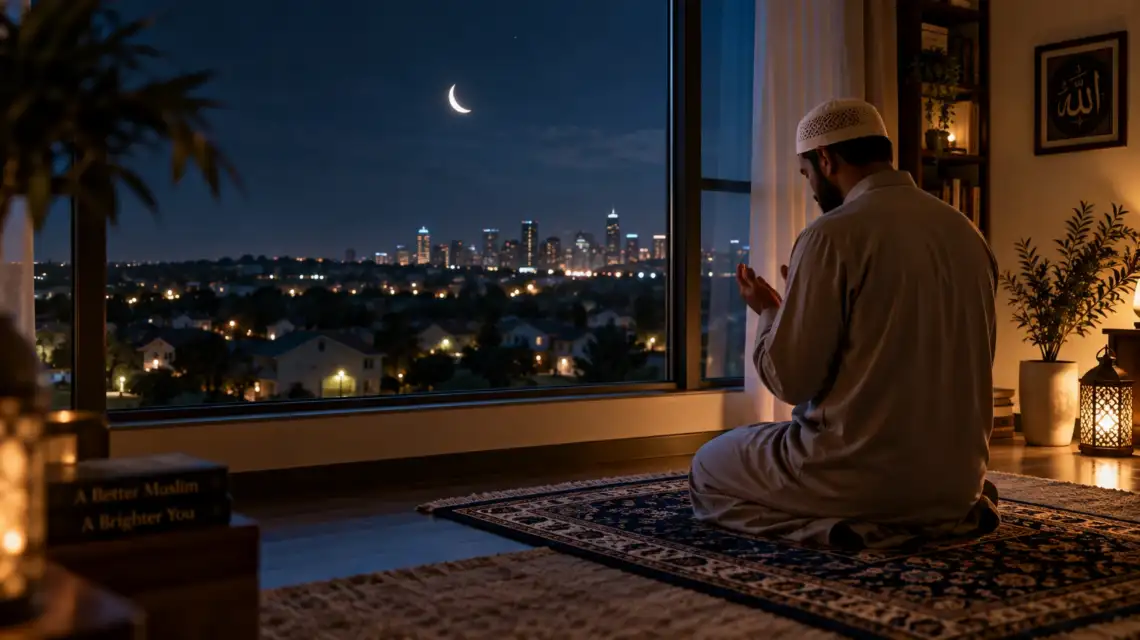
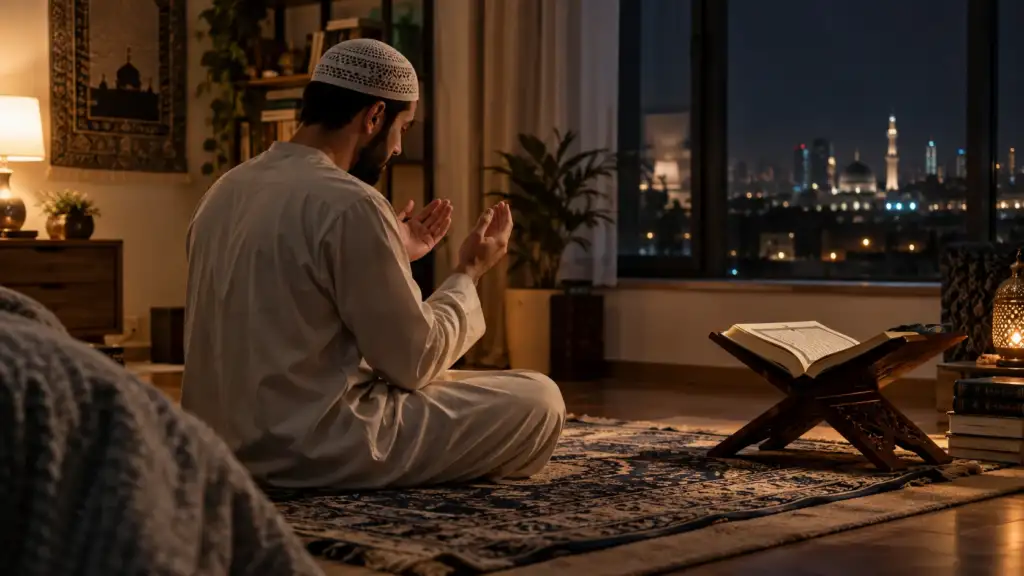
Night prayer is a voluntary prayer performed after Isha and before Fajr. In Islam, it is a quiet time for worship, Qur’an recitation, dua, and seeking closeness to Allah. The term can include Qiyam al-Layl, while Tahajjud is commonly used for night prayer performed after sleeping and waking. For many Muslims, the stillness of the night makes it easier to step away from daily distractions and focus on prayer. And you don’t need to begin with a long prayer or many rakahs. Two rakahs can be a simple starting point. Whether you pray soon after Isha or wake later before Fajr, night prayer can become a meaningful part of your regular worship.
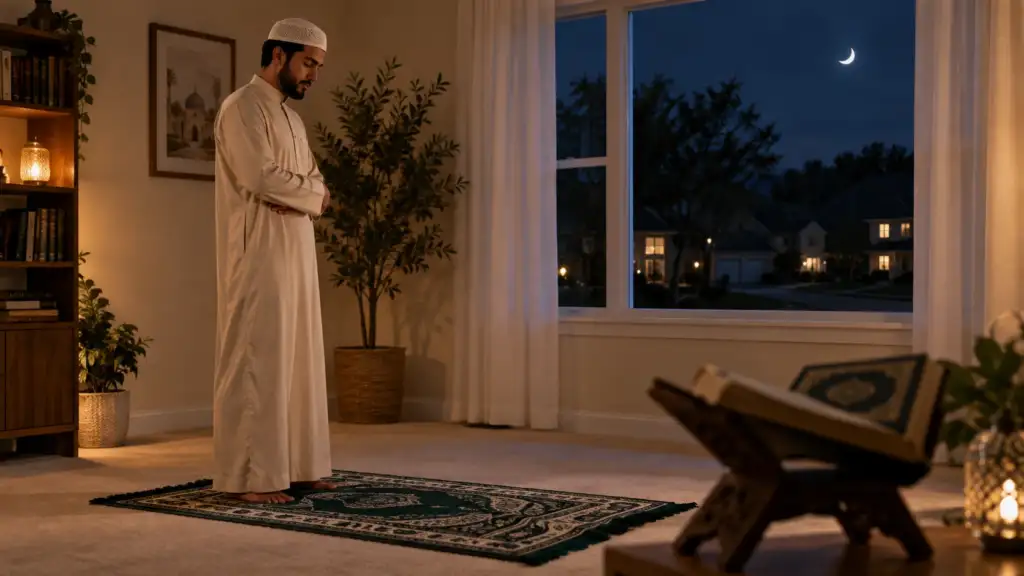
TL;DR: Night Prayer at a Glance
| Question | Quick Answer |
| What is night prayer? | Voluntary prayer performed after Isha and before Fajr |
| Best time? | The last third of the night |
| How many rakahs? | It can be prayed in pairs of two |
| Is it Tahajjud? | Tahajjud is commonly used for a form of night prayer |
| What about Witr? | Witr is an odd-numbered prayer associated with the end of the night |
Night prayer is a voluntary act of worship offered between Isha and Fajr. It may be prayed early in the night or later, with the last third often regarded as the best time. Beginners can start with two rakahs and add more as comfortable. Tahajjud is commonly associated with waking after sleep to pray, while Qiyam al-Layl is a broader term for night worship. Witr is usually prayed toward the end of the night.
What Is Night Prayer in Islam?
Night prayer in Islam is a voluntary prayer offered during the night, after Isha and before Fajr. It is a form of night salah and night worship through which Muslims can spend quiet time in prayer, Qur’an recitation, remembrance, and dua. Unlike the five daily obligatory prayers, night prayer is not required for every Muslim.
Qiyam al-Layl is the broader term often used for worship performed during the night, including voluntary prayer. Tahajjud prayer is a commonly used term for a type of night prayer, particularly prayer performed after sleeping and then waking up. The terms can overlap, and scholars may use them somewhat differently.
For a beginner, there is no need to get caught up in terminology. The basic idea is simple: set aside part of the night for voluntary prayer and worship. Even a short Islamic night prayer can be a meaningful addition to your regular salah routine.
When Is the Best Time for Night Prayer?
The best time for night prayer is during the nighttime period between Isha and Fajr. You can pray soon after Isha, in the middle of the night, or as a prayer before Fajr. For those able to wake up, the last third of the night is widely regarded as the most virtuous time. Your night prayer time will depend on where you live and the season, so US readers should check their local Islamic prayer times rather than relying on a fixed clock time.
What Is the Last Third of the Night?
The last third of the night is the final one-third of the time between Maghrib and Fajr. It is commonly considered the best time to pray Tahajjud, making it especially relevant when deciding your Tahajjud prayer time or the best time to pray Tahajjud.
How to Calculate the Last Third of the Night
Suppose Maghrib is 7:30 PM and Fajr is 5:30 AM. That gives you 10 hours of nighttime. Divide 10 hours by three, giving 3 hours and 20 minutes. The final third begins at 2:10 AM and continues until Fajr at 5:30 AM. So, in this example, 2:10 AM–5:30 AM is the last third. Actual times vary by location and season, especially across the US, so use your local Maghrib and Fajr times for an accurate calculation.
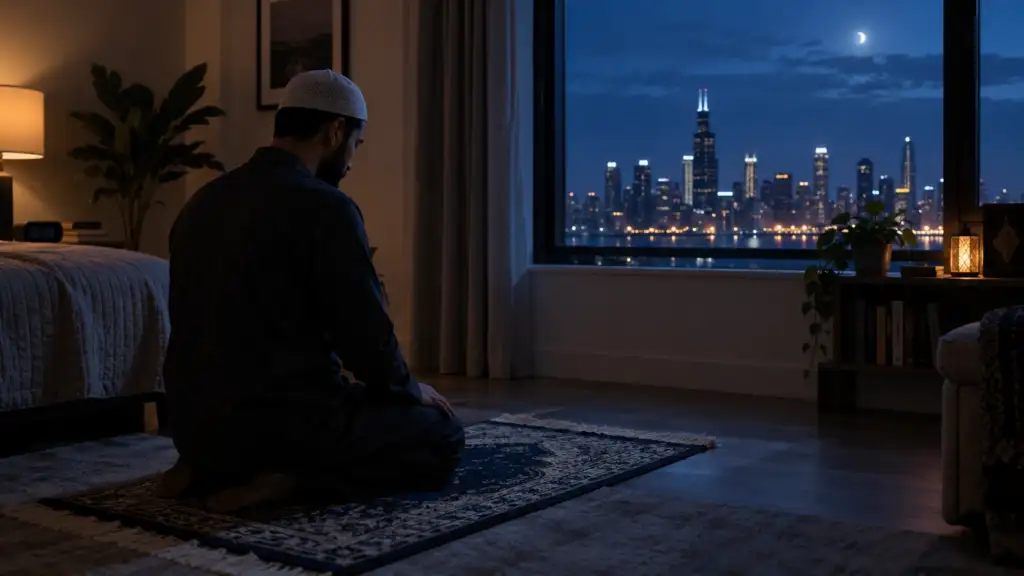
How to Pray Night Prayer Step by Step
To understand how to pray night prayer, start with the same basic method used for voluntary salah. Night prayer can be simple, and you do not need to make it lengthy for it to be meaningful.
1. Pray Isha
Begin by completing your obligatory Isha prayer. Night salah is performed after Isha and before Fajr, so Isha marks the beginning of the nighttime prayer window.
2. Make Your Intention
Have the intention in your heart to offer voluntary night prayer for the sake of Allah. There is no need to make the intention complicated or say it aloud.
3. Begin With Two Rakahs
If you’re learning how to pray Tahajjud, starting with two rakahs is a simple option. Pray them like other voluntary prayers, including the opening takbir, recitation, bowing, prostration, and the final sitting.
4. Continue in Pairs if You Wish
You can continue with additional rakahs if you wish. The Prophet Muhammad ﷺ taught that night prayer is prayed two by two, so prayer in pairs is a well-established practice. You can stop after two or continue according to your ability.
5. Make Dua
Use the quiet moments of night worship for sincere dua. You may ask Allah for forgiveness, guidance, strength, family well-being, or anything good. Dua during Tahajjud can be made in the appropriate parts of salah, and you can also make personal supplications after completing your prayer.
6. Complete the Night With Witr
Many Muslims finish their night worship with Witr prayer, an odd-numbered prayer traditionally offered toward the end of the night. Its details have different rulings and practices, so there is no need to go deeply into those differences here.
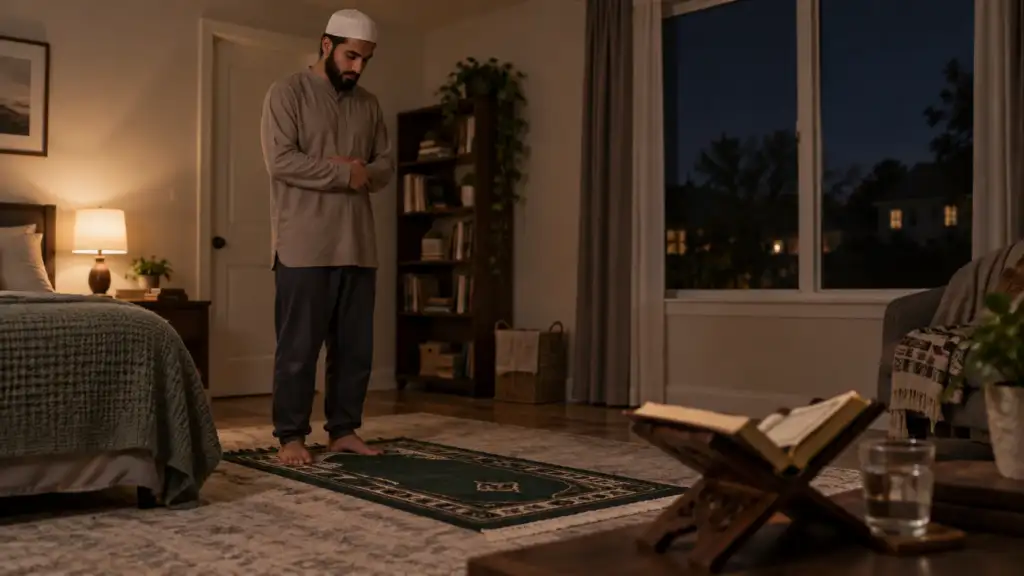
How Many Rakahs Are in Night Prayer?
If you’re asking how many rakahs in night prayer you should pray, you can start with two rakahs. There is no need to force yourself into a single fixed number. Night prayer is commonly offered in pairs of two, so you may pray two, four, six, eight, or more according to your ability and practice.
The Prophet Muhammad ﷺ regularly prayed at night, and Sahih al-Bukhari records that his night prayer was often described as eleven rakahs, including Witr. This report is useful when discussing Tahajjud rakahs, but it should not be treated as a requirement that every Muslim must follow exactly.
So, how many rakahs for Tahajjud? Two is a valid starting point, and you can add more if you wish. The regular night prayer rakahs are prayed in pairs, while Witr is a separate odd-numbered prayer that may be offered at the end of the night.
Night Prayer vs. Tahajjud vs. Qiyam al-Layl
The Tahajjud vs night prayer distinction can seem confusing because these terms often overlap. In simple terms, night prayer describes voluntary salah during the night, while Qiyam al-Layl is a broader expression for night worship. Tahajjud prayer is commonly used for voluntary night prayer performed after sleeping and waking. Witr is an odd-numbered prayer that is usually offered toward the end of the night.
| Term | Simple Meaning | Timing |
| Night Prayer | Voluntary prayer performed during the night | After Isha, before Fajr |
| Qiyam al-Layl | Broad term for night worship/prayer | During the night |
| Tahajjud | Commonly used for night prayer after sleeping and waking | During the night |
| Witr | Odd-numbered prayer | Toward the end of the night |
When considering the difference between Tahajjud and Qiyam, don’t get too stuck on labels. Islamic literature and scholars may use these terms somewhat differently. For a beginner, the practical point is simple: night salah can be offered after Isha and before Fajr, while Tahajjud commonly refers to a form of that night worship. Witr has its own place and is treated separately from the paired night prayer.
What Should You Recite During Night Prayer?
There is no single required surah for night prayer. You can recite any Qur’an passages you know, including shorter surahs, so beginners do not need to feel pressured to memorize long portions. If you’re wondering what surahs to read in Tahajjud, choose passages you can recite correctly and reflect on with attention. Longer Qur’an recitation is also encouraged when you are able. After or during the appropriate parts of worship, you can make sincere Tahajjud dua and ask Allah for forgiveness, guidance, mercy, and your personal needs. The focus should remain on sincere Qur’an recitation, prayer, and dua during night prayer, rather than making the practice unnecessarily difficult.
Why Is Night Prayer Important in Islam?
Night prayer holds a special place in voluntary worship. The Qur’an praises believers who spend part of the night in worship and seek forgiveness before dawn: “they used to sleep only little in the night” and seek forgiveness in the pre-dawn hours (Qur’an 51:17–18). The Prophet Muhammad ﷺ also described prayer at night as the best prayer after the obligatory prayers in an authentic hadith recorded in Sahih Muslim. His own practice shows how seriously he approached night worship; Sahih al-Bukhari records that he would stand in prayer for so long that his feet became swollen, explaining that he wanted to be a thankful servant. For Muslims, these teachings make the quiet hours a meaningful time for dua, repentance, Qur’an recitation, spiritual reflection, and seeking closeness to Allah while following the Sunnah.
Common Questions About Night Prayer
Is night prayer obligatory?
No. Night prayer is a voluntary act of worship and is not one of the five obligatory daily prayers. Muslims can pray it according to their ability, even if they only offer two rakahs.
Can I pray night prayer without sleeping?
Yes. You can pray voluntary night prayer after Isha without sleeping first. Tahajjud is commonly associated with waking after sleep, while Qiyam al-Layl is broader and can include prayer performed earlier.
Can I pray only two rakahs?
Yes. Two rakahs are a valid and simple way to begin. Night prayer is commonly offered in pairs, so you can pray two and stop, or add more if you wish.
Can I pray Tahajjud after Witr?
Yes, you may pray voluntary prayer after Witr if you wake later. However, you should not repeat Witr. If you expect to wake for Tahajjud, many scholars recommend leaving Witr until the end.
What is the best time for Tahajjud?
The last third of the night is widely regarded as the best time for Tahajjud. Calculate it using your local Maghrib and Fajr times, since the timing changes by location and season.
What should I do if I cannot wake up for the last third of the night?
Pray after Isha before going to sleep. You do not have to wait for the last third. A short, sincere night prayer is better than making the practice so difficult that you abandon it.
Conclusion
Night prayer does not have to feel difficult or lengthy. Start with two rakahs after Isha and before Fajr, then build the habit at a pace that feels manageable. If you can wake during the last third of the night, that time carries special virtue for worship, dua, and reflection. Tahajjud can become a meaningful part of that routine. And when appropriate, include Witr toward the end of your night worship. A small prayer offered consistently can be a beautiful way to stay connected to Allah.
2 thoughts on “Night Prayer in Islam: How to Pray, Best Time & Rakahs”